Shimabukuro-Ha Shitō-Ryū

Mabuni Kamon

Shitō-Ryū is the second most popular style of karate, both in Japan and worldwide.  It is also by far the most complete and comprehensive system of karate.  It was created by Mabuni Kenwa (1889-1952), a karate master who was one of only a handful to have been taught all three of the major branches of karate that existed in the late 19th century.  He combined all three of these styles into a single, multifaceted system.  The name "Shitō-ryū" (糸東流) was derived from the names of his two most influential teachers, Itosu Ankō and Higaonna Kanryō.  The 糸 is the "Ito" in Itosu and the 東 is the "Higa" in Higaonna.  Ryū (流) is usually translated as "school" or "style", but literally means "flowing from" or "a continuum."   So Shitō-ryū means "Itosu-Higaonna Style", or more poeticaly "the teachings that flow from Itosu and Higaonna".  To fully understand Shitō-ryū, it helps to know a little about those three systems that together comprise its curriculum, so we encourage you to read "The Origins of Shitō-Ryū" below. 

Pronunciation:  The "i" in Shitō is barely pronounced—more like a slight hesitation than a vowel—and the bar over the "o" (ō) indicates that it is sustained twice as long (like a half-note instead of a quarter-note in music), so Shitō is pronounced almost like the word "stow" with an "sh" instead of an "s".  In a similar way, "ryū" is pronounced as a single syllable; NOT as "rye you".

A more complete explanation of, and guide to, pronuncitation of Japanese words can be found in our pronuncition guide.  Our website also features a glossary of common karate-dō terminology.

The Origins of Shitō-Ryū
Posted by Pellman Sensei on 01 September 2010

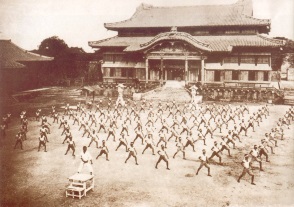
Karate at Shuri Castle 1937The most widely practiced of the late-19th century styles of karate was called Shuri-te ("karate from Shuri").  Shuri was the capital of Okinawa and the Ryūkyū Islands.   Shuri-te was a system of unarmed combat developed by the warriors and royal bodyguards who protected Shuri Castle and the royal family, so it was designed for situations in which the practitioner was either forbidden to have a weapon (such as inside the castle), or had been disarmed during battle.   Therefore, the majority of Shuri-te techniques are designed and intended to defend against an armed opponent who is attempting to invade a castle and/or assassinate its occupants.  And since Okinawa had been conquered by the Satsuma Han of Kyūshū in 1609 and controlled thereafter by a Japanese occupation force, the weapons Shuri-te was designed to defend against were the typical arms of the samurai, primarily swords, spears, jutte, daggers, and staves—often in cramped spaces.  For this reason, Shuri-te emphasises remaining out of range of these weapons until an opportunity is created to lunge quickly in with a single, devasting counter-attack.  During Mabuni Kenwa's youth, the premier teacher of Shuri-te was Itosu Ankō (1831-1915), who had served as personal bodyguard to the last independant king of the Ryūkyū Islands.

Around the time of the first recorded masters of karate, one of the busiest seaports in the world was the Okinawan city of Naha.  For centuries, it was a major center of trade for the nations in the Far East, its harbour filled with ships and its docks cluttered with trade goods.  It was a primary target of opportunity for pirates and thieves, so contingents of highly skilled and experienced guards for the merchants and their wares arrived aboard the vessels docking in Naha.  And when their duties were complete, these guards frequented the taverns, restaurants, and brothels of Naha to relax and occasionally let off steam.   As a result, Naha-te ("karate from Naha") was a blend of Chinese, Japanese, Indo-Chinese, Filipino, and native Okinawan fighting skills.  During Mabuni Kenwa's youth, the leading proponents of Naha-te were Aragaki Seishō (1840-1918) and his primary student,  Higaonna Kanryō (1853-1915).

The other significant Okinawan town of that time was Tomari, a beach town that served as a secondary port, exclusively for inter-island trade within the Ryūkyū kingdom.  It was also a fishing village and, because it attracted trade from other islands, it was a marketplace for many local farmers and tradesmen.  Since trade in Tomari was primarily between peasants, there were fewer highly-trained warriors roaming Tomari than in either Naha and Shuri, so Tomari-te ("karate from Tomari") tends to appear more primitive  than Shuri-te, while including techniques found in both Shuri-te and Naha-te, as well as techniques adapted to fighting in mud or wet sand.  The last karateka to practice Tomari-te exclusively were Matsumora Kōsaku (1829-1898) and Oyadomari Kōkan (1827-1905), and the style effectively died with them at the dawn of the 20th century.  Fortunately, Kyan Chōtoku (1870-1945), Motobu Chōki (1870-1944), and a few others learned several Tomari-te kata from them, which Mabuni Kenwa in turn learned from them and preserved as part of his Shitō-ryū system.

In 1902, a sickly 13-year-old boy named Mabuni Kenwa was introduced to Shuri-te master, Itosu Ankō in hopes that rigourous training in karate would strengthen both his body and spirit.  It was an introduction of true historic significance!
The Founder:  Mabuni Kenwa

Posted by Pellman Sensei on 01 September 2010
Mabuni Kenwa

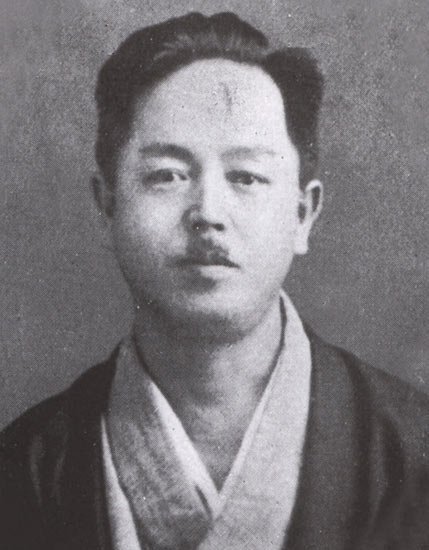
Mabuni Kenwa (摩文仁 賢和) was born in Shuri, Okinawa on 14 November 1889 to a family descended from Ufugushuku Kenyū (nicknamed "Oni" (Demon) Ufugushuku for his great size and strength), a 15th century Okinawan warrior and royal bodyguard of legendary deeds and honour.  Mabuni was apparently born with some sort of congenital weakness for which he was considered "sickly" or "feeble", so when he was 13, his parents arranged a formal introduction to the most famous karate sensei in Shuri, Itosu Ankō.   Thus, Mabuni became a pupil of Itosu Sensei at about the time Itosu was just beginning the first public instruction of karate in the Shuri school system.   In 1908 Mabuni's best friend, Miyagi Chōjun, introduced him to Higaonna Kanryō.

For the next seven years, Mabuni trained diligently under both Itosu and Higaonna, learning both Shuri-te and Naha-te from their most renowned instructors of his time.

In 1915 both Itosu Sensei and Higaonna Sensei died within months of each other.  In 1918, the last of the renowned 19th century karate-ka, Aragaki Seishō, also died.  Recognising that in the absence of these legendary teachers, karate could easily splinter into competing, contentious factions, Mabuni Sensei founded the Karate Kenkyū Kurabu ("Karate Research Club") in 1918.  The Kenkyū Kurabu met regularly in Mabuni's garden ... (more information here)

The Legacy:  Mabuni Kenzō

Posted by Pellman Sensei on 10 September 2010
Mabuni Kenzo

Following the death of Mabuni Kenwa on 23 May 1952, a schism quickly developed over his successor as the family leader (sōke) of Shitō-ryū.  Traditionally, because Mabuni Kenwa had not specifically named a different person to succeed him, his eldest son, Mabuni Kenei would have been the presumed successor.  But, prior to his father's death, Mabuni Kenei had taken little interest in karate and may not even have been a black belt at the time.  Several of the style's senior students were considerably more qualified and refused to accept Mabuni Kenei's leadership.  Among them were Sakagami Ryūshō and Kokuba Kōsei, each of whom formed an independant Shitō-ryū organisation shortly after Mabuni Kenwa's death.

Mabuni Kenzō, (1927-2005) who had earned his shodan (first-level black belt) in 1943, was the more experienced, knowledgeable, and proficient of the two brothers, but as the younger son of Mabuni Kenwa was not considered by traditionalists to be eligible to succeed his father as sōke.  Complicating matters, 25-year-old Mabuni Kenzō was junior in rank to Iwata Manzō, who supported the succession of Mabuni Kenei.  However, Mabuni Kenwa's widow believed that Kenzō was the more qualified and devoted of her two sons to serve as successor to her late husband, so she asked Kenzō to accept the role.  Fully realising that to break with tradition would outrage many senior students and lead to the very thing that his father had devoted his life to preventing—the splintering of karate into numerous competing factions—he went into seclusion for two years to contemplate the ramifications of the decision he faced.  When he returned in 1954, he took charge of his father's dōjō in Ōsaka and assumed the mantle of leadership of Shitō-ryū as nidai-me Sōke (2nd family leader).  Naturally, Mabuni Kenei and many others disputed this and claimed the role and title of nidai-me Sōke for themselves.

As a result, several organisations were formed in the latter half of the 1950s all claiming to be the "true" proponents of Shitō-ryū:  the Shitō-Kai (Mabuni Kenei and Iwata Manzō), Itosu-Kai (Sakagami Ryushō), and the Seishin-Kai (Kokuba Kōsei), being among the most prominent of these.  Mabuni Kenzō spent the remainder of his life strictly adhering to his father's 1929 written syllabus and thus claimed that his Nippon Karate-dō Kai (later renamed the International Karate-dō Kai) was the only proponent of Seitō Shitō-ryū ("True/Pure Shitō-ryū").  Today, each of these organisation has in turn produced additional offshoots, so that there are now more than a dozen major organisations teaching variations of Shitō-ryū.  Of these, only the International Karate-dō Kai still strictly follows Mabuni Kenwa's 1929 syllabus.

In 1993, Mabuni Kenzō made his first trip outside of Japan to promulgate Seitō Shitō-ryū, having been invited by his friend, Ōzawa Osamu to demonstrate and teach at Ōzawa's international karate tournament in Las Vegas, Nevada, USA.  That trip would lead to another propitious meeting  ... (more information here)

21st Century:  Shimabukuro Masayuki

Posted by Pellman Sensei on 01 September 2010
Shimabukuro Masayuki Hidenobu

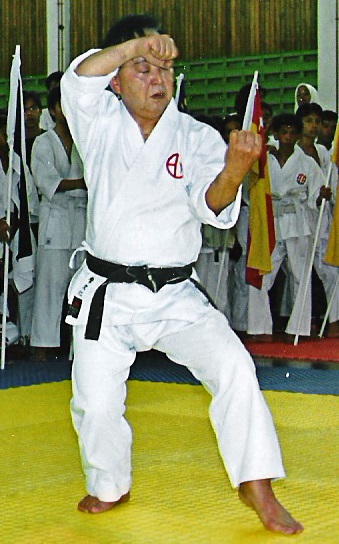
Shimabukuro Masayuki Hidenobu was born 27 March 1948 in Osaka, Japan.  He began his martial arts training in 1963 at the age of 15 with Sō Dōshin of Shorinji kempō.  In 1965 he became a direct student of Hayashi Teruō (1924-2004) in Hayashi-ha Shitō-ryū.  Hayashi Sensei had been a senior student of Kokuba Kōsei and had served as president of the Seishin-Kai from 1959 to 1970.  In 1970, Hayashi Sensei left the Seishin-Kai and founded Hayashi-ha ("Hayashi branch") Shitō-ryū., so Shimabukuro became a student of Hayashi-ha.  In 1978, at the rank of yondan (4th level black belt), Shimabukuro moved to Southern California and began teaching Hayashi-ha Shitō-ryū there, mostly to law enforcement organisations.

In 1993, Shimabukuro Sensei took three of his students from San Diego County to compete at Ōzawa Osamu's international tournament in Las Vegas, Nevada.  One of those students was Leonard Pellman, who was nidan in Hayashi-ha Shitō-ryū at the time.  While there, Shimabukuro Sensei asked Pellman, the most junior of the three students, to attend the training seminar led by Mabuni Kenzō.  That night, Shimabukuro Sensei questioned Pellman in depth about the seminar and Pellman's impression of Mabuni Sensei as a karate-ka and instructor.  The following year Pellman was again asked to attend the seminar taught by Mabuni Kenzō and was again questioned in detail about it.  In 1996, Shimabukuro Sensei began informal discussions with Mabuni Kenzo, and in 1998 formally affiliated with the International Karate-do Kai.  In 1999 he was promoted to nanadan (7th level black belt) in Seitō Shitō-ryū by Mabuni Kenzō.

The primary emphasis of Hayashi-ha karate was on tournament competition, and this had long been Shimabukuro Sensei's focus, as well.  But, a significant shift in his perspective occurred not long after affiliating with Mabuni Kenzō.  Thereafter, his approach to karate instruction was primarily on its combat effectiveness.  From 2001 through 2005, Shimabukuro Sensei and Leonard Pellman collaborated long distance to write the book Katsujinken:  Living Karate and The Way to Self-Mastery, which represented Shimabukuro Sensei's evolving understanding of karate through the end of the 20th century.  It combined what he had learned up to that point from both Hayashi Sensei and Mabuni Sensei.  On 24 September 2004, Hayashi Teruō died of lung cancer.  Then on 26 June 2005, Mabuni Kenzō also died.  So, just as Katsujinken was nearing publication, Shimabukuro Sensei suffered the loss of both of his instructors.

When the first printing of Katsujinken arrived, Shimabukuro held up a copy and told Pellman, "This book explains karate as it is now, Len-san.  So our next book will explain what karate should be for the 21st century and the next generation of karate-ka."  That book, ... (continue reading)

Shimabukuro-Ha

Posted by Pellman Sensei on 01 September 2010
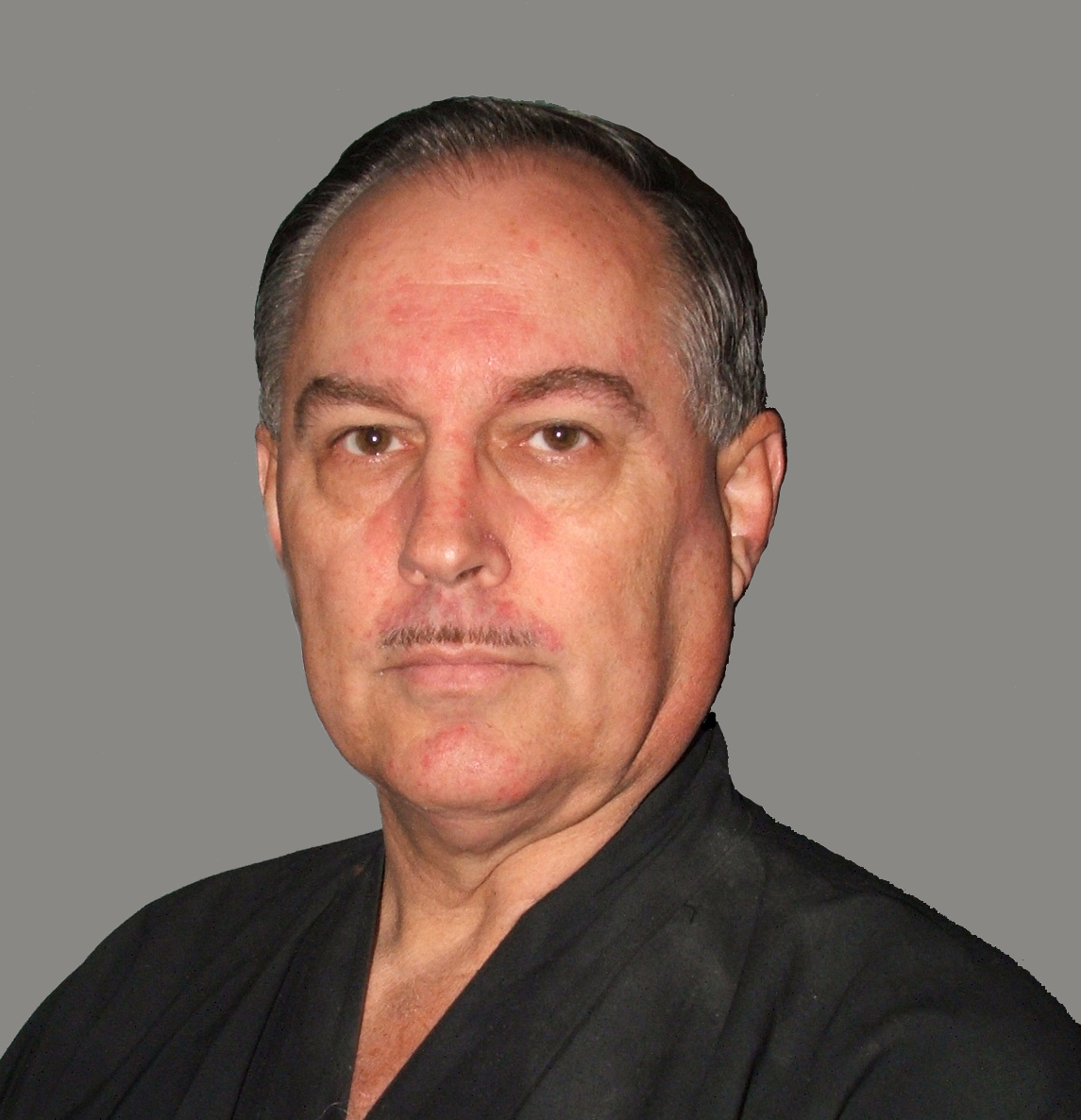
Leonard Masanobu Pellman

The result of Shimabukuro Hanshi's training and research in karate-dō is what we now call Shimabukuro-Ha Shitō-Ryū as a distinct branch of Shitō-Ryū karate-dō.  The history behind the development of Shimabukuro-Ha reveals how it came into being, but it is more important to understand what makes Shimabukuro-Ha unique and worthy of preservation.

To summarise, Mabuni Kenwa combined the training he received from Itosu Ankō, Higaonna Kanryō, and Aragaki Seishō with his research conducted at the Karate Kenkyukai with Kyan Chōtoku, Aragaki Ankichi, Miyagi Chōjun, Gō Kenki (Wu Xianhui),  Tawada Shimboku, Hanashiro Chōmo, and more.  From this he distilled his encyclopedic knowledge of Okinawan karate into his 1929 syllabus plus at least eight kata of his own creation.

By the time of Mabuni Kenwa's death in 1952, two of his most senior students, Sakagami Ryūshō and Kokuba Kōsei had broken away and founded their own dōjō and branches of Shitō-Ryū.  Sakagami created the Itosu-Kai (later renamed Itosu-Ryū) and produced such legendary karateka as Demura Fumio.  Kokuba (aka Kuniba) founded the Seishin-Kai, at which Hayashi Teruō received much of his early instruction.

Hayashi Teruō began training at the Seishin-Kai in 1945 under Kokuba Kōsei.  In the early 1950s he also trained with Sakagami Ryūshō of the Itosu-Kai.  In 1957, Hayashi traveled to Okinawa seeking to better understand the origins of karate-dō.  There, he trained with Nagamine Shōshin (1907—1997), the founder of Matsubayashi Shōrin-Ryū, who had been a direct student of Kyan Chōtoku, Motobu Chōki, and Shimabuku Tarō.  As a result, Matsubayashi Shōrin-Ryū is a blend of Shuri-te and Tomari-te techniques and principles.  Hayashi also trained with Nakaima Kenkō in Ryūei-Ryū karate-dō, a style that had previously been taught exclusively to members of the Nakaima family.  Upon the death of Kokuba Kōsei in 1959, Hayashi returned to Ōsaka and led the Seishin-Kai until 1970, when Kokuba's adopted son took control.  Thus, Hayashi-Ha Shitō-Ryū combines the teachings of two of Mabuni Kenwa's senior students with that of Nagamine Shōshin and Nakaima Kenkō.  It bears many commonalities with seitō (pure or original)  Shitō-Ryū, but also many additions to, and modifications of, Mabuni Kenwa's syllabus.  Hayashi placed foremost importance on the fighting effectiveness of karate-dō, as demonstrated by his students' performance in kumite (sparring) competition.  As a result, Hayashi-Ha karateka were dominant tournament competitors in the 1970s, 1980s, and 1990s.

 Shimabukuro Hanshi began his budō training in 1963 school with Shorinji kempō, an art that combines the striking techniques (gōhō) of karate with the grappling technique (jūhō) of jūjutsu.  In 1965 he enrolled in the Seishin-Kai as a student of Hayashi Teruō, and remained with Hayashi for 30 years.  During that time Shimabukuro Hanshi shared Hayashi's emphasis on the practical effectiveness of karate and testing that effectiveness in tournament competition, but differed in one significant aspect:  a greater emphasis on the use of jūhō (grappling methods) contained in kata.   Another factor that affected Shimabukuro Hanshi's understanding of karate was his extensive training in Nippon budō, particularly iaijutsu and jōjutsu.  His profound knowledge of the techniques, principles, and strategy of these arts helped him to recognise similar principles applicable to karate.   

When Shinabukuro Hanshi formally affiliated with Mabuni Kenzō in 1996, ... (continue reading)

The JKI Karate Curriculum

Posted by Pellman Sensei on 01 September 2010
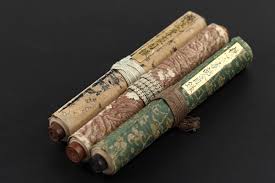
Mokuroku Makimono

In the broadest sense, the curriculum of Shimabukuro-Ha Shitō-Ryū is based on the three major elements that are commonly called the "Three K's of Karate":

n Kihon Fundamentals (Stance, posture, movement, power, etc.)
n Kata Patterns containing practical self-defence techniques
n Kumite Sparring, including gōhō (striking and blocking) and jūhō (escape, grappling, and submission)

Each of the above K's has several key components, as well as underlying principles that produce maximum effectiveness.   Principles applying to kihon, for example, include kamae (structure of the body), maai (controlling the distance between yourself and opponent), ashi sabaki (footwork methods), and much more.   Performance of kata not only involves use of kihon and its underlying principles, but also bunkai (analysis of kata components) and oyo (practical applications of the movements).  Timing and tempo of kata performance are derived from bunkai and oyo and are based upon the actions of the imaginary opponent and the techniques being employed to counteract or exploit the opponent's actions. Likewise, kumite has its own set of underlying principles, like angular movement, speed, timing, anticipation and disruption of the opponent's actions, fakes, and more.  The JKI curriculum is therefore a fusion of physical, mental, emotional, and spiritual elements that maximise the effectiveness and versatility of technique and the likelihood of victory.

The core of the Shimabukuro-Ha Shitō-Ryū curriculum is kata training.  Kata are patterns of movement that instill "muscle memory" of kihon along with tactics and strategies for applying those kihon to nearly any imaginable self-defence situation.  Once those methods are learned and instilled through kata, they are practiced in various forms of kumite.   Kumite training typically begins with ippon kumite, which applies a sequence of movements from a kata against a single (ippon) attack, such as a strike, kick, or grapple.  Once student develop a degree of proficiency in ippon kumite, they progress to sambon kumite, which involves defence against three (sambon) attacks in quick succession, and yakusoku kumite.  Yakusoku kumite is usually translated as "pre-arranged" or "choreographed" kumite, but yakusoku kumite is not choreographed in the sense of movie fight choreography or dance choreography in which participants simply rehearse a series of movements.  Instead, yakusoku kumite describes training in which a training partner employs a predetermined attack so that one or more defensive actions from kata can be practiced under conditions that simulate reality as closely as possible.  Listed below are the kata included in the Shimabukuro-Ha curriculum:

Shuri-te Kata Naha-te Kata Mabuni-kei Kata Sankō Kata*
Kihon Kata(chi) Ichi Shinsei Kenshū Annanko
Kihon Kata(chi) Ni Sanchin Jūroku Matsumora-no-Bassai
Heian (Pinan) Nidan Saifa Matsukaze Tomari-Chintō
Heian (Pinan) Shodan Tenshō Shihō-Kōsōkun Tomari-Seisan
Heian (Pinan) Sandan Seienchin Myōjō Tomari-Kusanku
Heian (Pinan) Yondan Shishōchin Aoyagi (Aoyanagi) Rōhai Ichi (Rōhai Ge)
Heian (Pinan) Godan Sepai Kenpaku Rōhai Ni (Rōhai Chū)
Naifanchi Shodan Sanseiru Kenshō Rōhai San (Rōhai Dai)
Naifanchi Nidan Seisan Happōshō Empi
Naifanchi Sandan Kururunfa Shinpa  
Bassai-Dai Suparimpei    
Bassai-Shō      
Matsumura-Ha Bassai Tomari-te Kata Nakaima-kei Kata  
Kōsōkun-Dai Tomari-Bassai Pachū  
Kōsōkun-Shō Chatan-Yara Kushanku Heiku  
Niseishi   Paiku  
Aragaki-Niseishi Hayashi-kei Kata Anan  
Jitte   Anan-Dai (Anan-Ni)  
Jiin Haffa Nipaipō
Jion Hakkaku (Hakutsuru) Ōhan
Gojūshihō   Ōhan-Dai  
Wanshū      
Rōhai      
Matsumura-no-Rōhai      
Chintō      
Chinte
Sōchin      
Unsū (Unshū)      
       

*Sankō kata are "reference" kata that are not part of the standard or required training curriculum, but are found in other karate styles or combat systems and are considered useful supplements to the standard curriculum.  Yūdansha are encouraged to study and familiarise themselves with sankō kata.

The standard curriculum of Shimabukuro-Ha Shito-Ryū contains roughly 60 kata, roughly 20 of which are required for advancement to shodan (1st level black belt).  Most other styles of karate have fewer than 15 kata in total, so it our curriculum may at first seem excessive, but one must consider the fact that Shimabukuro-Ha contains kata and their strategies and principles from every major style of karate and therefore provides karateka with the most complete and comprehensive understanding and training in self-defence available. 

Advancement in kyū (coloured belt) and dan (black belt) ranks in Shimabukuro-Ha Shitō-Ryū is achieved through shinsa (testing).   A karate-dō shinsa is more than just a test of skills or memory.  At the JKI, shinsa begins with certain basic qualifications, such as minimum training time at previous rank, minimum age, demeanor and behaviour in the dōjō, and other indications of suitability for promotion.  The shinsa itself involves sahō and reihō (preparation, attitude, and etiquette), demonstration of kihon (fundamentals), kata, and various forms of kumite, as well as bunkai (analysis of kata) and ōyō (practical application of kata techniques under realistic conditions), and gakka (knowledge of the history, philosophy, tactics, and strategy of budō and Bushidō).  It is a process that tests the candidates' skills, physical and mental endurance, emotional stability, maturity, and spiritual strength.  It is both a test and a trial.  A more detailed description of the dan-i (grading) system and shinsa (testing) process is available here.

Conclusion ...

Schedule a Seminar

Random foliage

Pellman Shihan regularly conducts Nippon budō and Okinawa budō seminars throughout North America on behalf of the Seishin-Kan.

For information on how to arrange for Pellman Shihan to conduct a seminar in your area, please click here.

Promotion Requirements

Related Links